Sissi is exceptional amongst Bronze Age sites on Crete for the amount, quality, and broad variety of types of plaster that survives, both in the houses as well as in the court building. Due to the nature of plaster, from mud- to lime-based and the many and various varieties between, the study of these materials is necessarily interdisciplinary.
The careful and consistent documentation and recording of plaster – regardless of whether it preserves evidence of paint or not – from the start of the excavations at Sissi allows for a detailed and nuanced understanding of the original locations, chronology, conditions, possible purposes, and decorations of this material. From its earliest discovery, plaster is documented and recorded not only by the excavator(s), but also by conservators trained in the delicate arts of consolidation and stabilization (Fig. 1). Such skills and knowledge are critical to determine when and how the material can and should be removed from architectural contexts for optimal preservation, study, and storage. This facilitates further academic study by maintaining the interlocking positions of fragments as they were found, delicate cleaning of painted surfaces, and removing environmental concretions that may otherwise complicate or obfuscate continued future study.
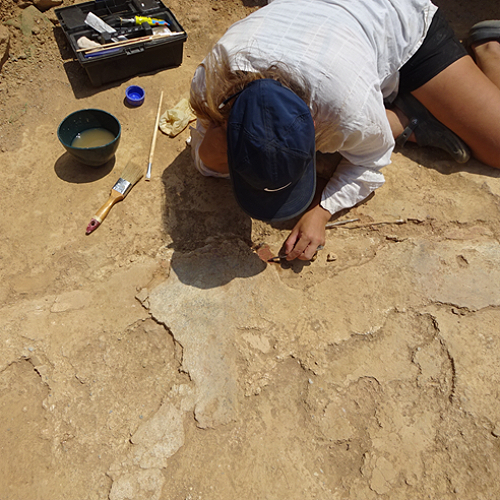
Fig. 1: Conservator Athina Kritikou cleaning a plaster floor on site in preparation for stabilization and transportation.
Full and thorough study of plaster is necessarily an interdisciplinary venture at the intersection of archaeology, art history, mineralogy, geology, and chemistry (Brysbaert 2008; Becker, Jungfleisch, and von Rüden, eds., 2018). Because plaster is composed of a lime- and/or mud-base and possesses many and various inclusions, a variety of scientific material analysis techniques can and should be used to learn more about the materials found in different plasters, to include the applied pigments. Such studies may then provide significant additional information, including but not limited to the season in which the plaster was mixed — which is often indicated by impressions and inclusions of plant matter — and the intentional recycling and reuse of other materials, such as pottery, stone, and previously-set-plaster, for instance. Plaster can also preserve organic materials that were not intentionally included as ingredients, such as threads from textiles and even traces of wood from architectural structures (Fig. 2).
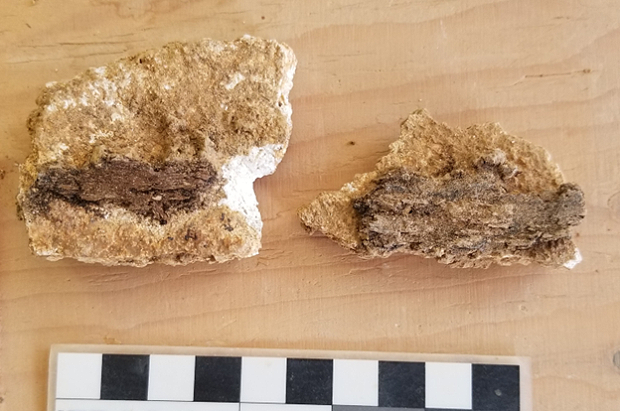
Fig. 2: Lime plaster that preserves small amounts of wood.
Lime plaster is perhaps best known from the Bronze Age Aegean as an artistic medium. Sissi preserves evidence of architecturally decorative painted plaster, where single- and multi-layered painted plaster floors survive (Fig. 1), as well as painted plaster walls (Fig. 3) and even ceilings. Although figural imagery is not yet confirmed at Sissi, some motifs appear identifiable, such as an incised rosette painted with yellow and red ochre pigments (Fig. 4), and possible indications of a large scene of grasses and reeds painted with red ochre (Fig. 5). Other colors found in/on lime plaster at Sissi include light and dark blue, black, and white.
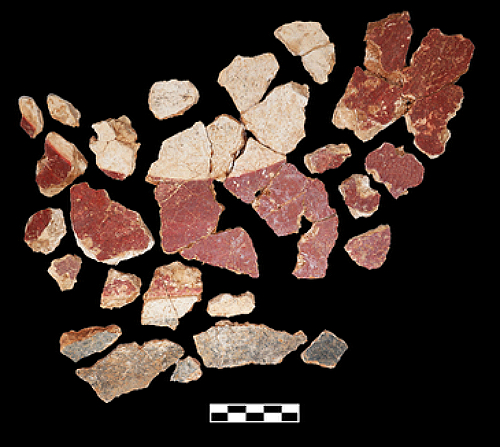
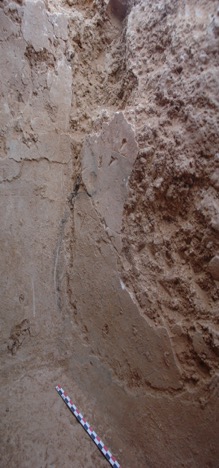
Fig. 3: Painted lime plaster that with incision marks and stringlines (left); continuously lime plastered walls and floor with incision marks (right); both from Space 19b of Zone 5.
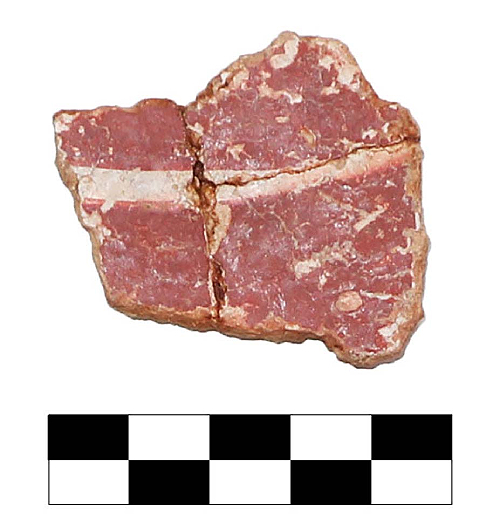
Fig. 4: Lime plaster fragment showing a rosette motif; found along the main terrace wall of Zone 5.
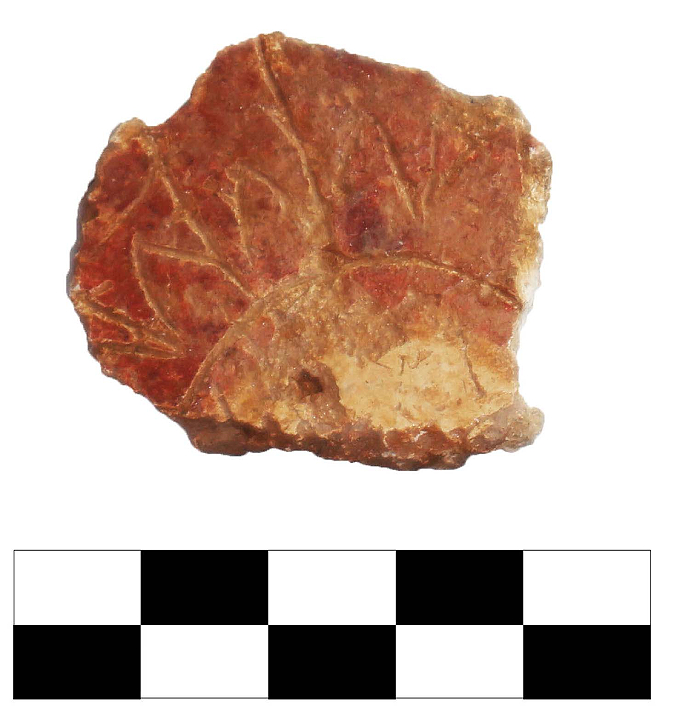
Fig. 5: Lime plaster fragment showing a possible indication of a larger grasses and reeds motif from Space 18 of Zone 5.
Creating such works begins with layering plaster over the surface-to-be-decorated, and then the motif is plotted onto the wet or damp surface with key steps: underpainting, incisions, and snaplines. Underpainting involves sketching the motif into the penultimate layer, often with ochres and/or charcoal. This guide is briefly visible beneath the final, finest layer before it dries, ensuring the finished imagery appears exactly where and how intended. Incisions are guiding lines created by cutting into the surface with a thin, sharp-edged item; snaplines are straight lines created by drawing a cord or string taut near the plaster, which is then plucked so that it strikes the wet surface, leaving behind the impression of a straight line that can guide the painting of features such as bands or other compositional or iconographic linear elements. These preparatory steps guide the artists’ execution of the desired motif appropriately and within the allotted space. The presence of such architectural dressings may speak simply to the space’s communication of wealth, or perhaps more specifically to the possible use of the space, which at present remains undetermined.
In the Bronze Age, plaster was used not only for the decoration of architectural surfaces such as floors, walls, and ceilings, but it constitutes a key stabilizing component of architecture (Shaw 1973). It often serves as one of the few surviving indications for the use (and approximate size) of wooden beams in roofs and ceilings (Fig. 6). Select items were also made in part or entirely from this material, such as loom weights. Shelves, tripod offering tables, and many other objects are found coated with plaster that sometimes possesses painted decoration, as well.
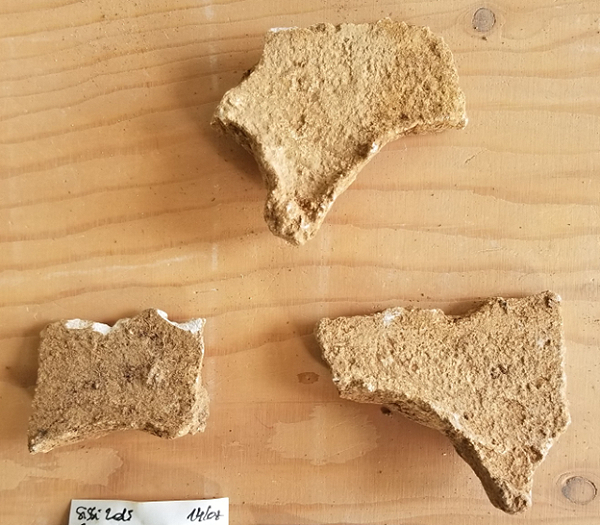
Fig. 6: Structural lime plaster that preserves the form of the interstices between long-decomposed wooden ceiling beams.
References
Becker, J., J. Jungfleisch, and C. von Rüden, eds. 2018. Tracing Technoscapes: The Production of Bronze Age Wall Paintings in the Eastern Mediterranean, Sidestone Press, Leiden.
Brysbaert, A. 2008. The Power of Technology in the Bronze Age Eastern Mediterranean: The Case of the Painted Plaster. Monographs in Mediterranean Archaeology 12. Equinox, London.
Shaw, J.W. 1973. Minoan Architecture: Materials and Techniques, Annuario della scuola archeologica di Atene et delle missioni italiani in Oriente, vol. 49. Instituto Poligrafico dello Stato, Rome.
Marie N. Pareja
Salisbury University, Assistant Professor of Art History and University of Pennsylvania Museum of Archaeology and Anthropology, Consulting Scholar, Mediterranean Section